Showing posts with label expension. Show all posts

Thursday, August 19, 2010

Great article about EgyptAir

Interview: Egyptair group chairman Hussein Massoud

With the end of a renewal phase in sight, EgyptAir Group chairman and chief executive Hussein Massoud is turning the focus onto capitalising on its key geographic advantage

For EgyptAir the pieces of the jigsaw are coming together. There is group profitability, Star Alliance membership, a new dedicated terminal at its Cairo base and investment in new aircraft, bringing its fleet and onboard product bang up to date. Indeed, by the time IATA's annual general meeting rolls into Cairo next summer, itself another sign of EgyptAir's growing presence on the global stage, the carrier will have all but renewed its fleet.

Yet this is just the start. Current fleet plans largely focus on renewal, but growth is on the long-term horizon. "EgyptAir has to be bigger," says Hussein Massoud, chief executive and chairman of EgyptAir's holding company. "We have ambitious plans from 2014 to 2020 and from 2020 to 2025. These will be decided by the end of the year, but I think it will be a very ambitious plan. The key opportunity for us is that we will enlarge our network, either by adding new destinations or by increasing frequencies. We have a special chance concerning Africa. I think we have a good product, with more cause for customer satisfaction."

Egyptair Massoud (445) Billypix
All pics Billypix
Like the country itself, EgyptAir has a long history. The airline dates back nearly 80 years. But it is the transformation begun in the first half of the last decade that has laid the foundations for today's strategy. This created a holding structure in which the airline is the largest of nine subsidiaries, and a change in ethos to focus more on business traffic. The airline was previously built around leisure and ethnic traffic, reflecting the dynamic tourism and population of Egypt. Its network was revamped, fleet modernisation initiated with Airbus A330-200s and a path began that ultimately led to alliance membership. By October 2007 EgyptAir was Star Alliance bound and just nine months later it formally joined. It has since emerged as one of the more enthusiastic alliance members.

Nowhere is this more evident than at Cairo's Terminal 3, which opened just under two years ago and helps drive EgyptAir's hub aspirations. Cairo became the first Star Alliance home carrier airport to feature a dedicated Star Alliance-branded lounge. EgyptAir still owns and operates it, but brands it Star Alliance. "One of the priorities of Star Alliance is its move-under-one-roof concept," says Massoud. "With a dedicated EgyptAir and Star Alliance terminal, we had a very good opportunity from day one.

"With Star Alliance we think we are the gate to Africa," he adds. The carrier works closely with Star member South African Airways to connect Africa to other Star hubs through Cairo - and could develop this further with a connection in central Africa if Ethiopian Airlines' Star Alliance interest comes to fruition. EgyptAir, which has just added flights to Dar es Salaam in Tanzania, Nigerian city Abuja and most recently to Juba in southern Sudan, now has 17 destinations in Africa. "We are looking to double this over the next five years, or maybe four," says Massoud. "This is where we will grow."

This role builds on Egypt's location, straddling the top of Africa and the Middle East, with Europe above it. It puts much of the three continents firmly on its radar within a five hour flight time and its location is a recurring theme when Massoud talks of the strength of the carrier. "We have a very competitive geographical location," he says.

To build on this position and with its Star role in mind, EgyptAir adjusted its network and fleet strategy accordingly. "We give more attention to short- and medium-haul routes and we increased our single-aisle fleet," he explains. It replaced part of its Boeing 777-300 order to take eight more 737-800s. "Our plan is more destinations in the medium- and short-haul market. We will also increase frequencies to key destinations like London Heathrow, Paris, Amsterdam and Istanbul."

New 737-800 flights to Copenhagen will begin in October, marking a return to the Danish capital after six years. "This time the game has changed," says Capt Alaa Ashour, chairman and chief executive of the EgyptAir mainline operation. "The route has changed, the partner [now Star Alliance member SAS] has changed, the whole elements have changed."

HOLDING FIRM

Massoud Egyptair (200) Billypix
EgyptAir's holding group includes operating airlines EgyptAir, EgyptAir Cargo and regional unit EgyptAir Express. Its ground, in-flight and engineering services subsidiaries support these operations, while tourism, duty free and medical services are among its other interests. "Each is a profit centre and we get the benefits from synergies," says Massoud, crediting this as contributing to turning from a loss-making to a profitable operation. It netted profits of 573 million Egyptian pounds ($100 million) to June 2009 and aims to lift profits for the year ahead. "EgyptAir is our black horse, it represents around three-quarters of revenues, but we rely on synergies between the subsidiaries. We have to grow all the subsidiaries to get better results," he says, adding there are no plans for any sell-offs. "If we think any are not of benefit to the others, we will get rid of it. But for the time being, that is not in our thinking."
On long-haul the carrier serves a number of routes and is likely to add to its North American destinations - currently it serves New York JFK - when it adds its last two 777-300ERs next year. North American Star Alliance partner hubs in Chicago, Toronto and Washington are all candidates. "We are concentrating our long-haul operations on the profitable and prestige routes," says Massoud. "And we use the huge network of Star Alliance for routes we couldn't, or wouldn't want to, operate ourselves.

"The main objective of Star Alliance is to offer better services for the passenger so we'd like to use much [of the new 737-800 capacity] to Africa. We want the passenger of Star Alliance not to feel any different when travelling from Cairo to Africa. Our objective is to enhance our in-flight service with a new product to match the requirements of Star Alliance."

While many carriers slowed capacity plans in the crisis, EgyptAir sped up its fleet renewal. August saw the first of five A330-300s arrive - a year earlier than planned. The remainder follow next year. The A330s are part of a swathe of deliveries which has already seen two 777-300s arrive this year. Four more 777-300s and eight 737-800s will follow over the next 18 months. "We have got the benefits of the recession," says Massoud of the new arrivals. "We signed the contract with Boeing [for 737-800s] last July and we receive the first aircraft within 13 months." The timing looks opportune, given the swelling of the manufacturer orders book at the recent Farnborough air show.

There is also an enhanced onboard product. The carrier, which offers a two-class cabin system, is focusing on raising standards in the business cabin. Its new A330-300s feature lie-flat seats in business class, a new Panasonic in-flight entertainment system and OnAir's in-flight wi-fi service and mobile connectivity. Its 737-800s will feature an enlarged business cabin, with 24 seats in a generous 48in (122cm) pitch to create wider cabin feeling, in a bid to increase its premium revenues.

"All our marketing campaigns, everything we invest is in the business class, which then feeds into the economy cabin," explains Ashour. "People know they get a premium class product and that they will get value for money in business class. This is how we are trying to be competitive with the aggressive competition in the market."

Massoud adds: "We have enhanced and upgraded our product; this gives us a chance to increase the yield. We have restructured our pricing system and we have not forgotten about the cost-cutting side. That remains very important. We identify the big areas of cost and then we decide how to apply cost savings." Distribution is one potential area where the carrier hopes for savings by increasing online bookings by upgrading its website.

Ashour and Massoud have been in their current positions since September last year, although both were already established figures at the carrier. Ashour has been a pilot at the airline since 1988 (see box story) while Massoud - after a 20-year career in the Egyptian air force and heading aviation companies Smart Aviation and Mitrage - was vice-chairman of the holding company for a year and a half before taking on the top job.

Massoud says his objective on taking the role has been to "keep, but enhance and upgrade" the company's reputation. But before he could look at the long term, he faced a more immediate issue. EgyptAir in the summer of 2009 was given a warning by the European Commission that it risked being placed on its blacklist of international carriers banned from operating in EU airspace because of safety concerns in several areas of its operation. "It's the first challenge I faced because EgyptAir was confronting a very bad situation," says Massoud. "Concerning safety, we did not have a problem," he says, characterising the problems as smaller issues that reflected a different cultural approach. "This had to change to be with international norms. We had a misunderstanding between our

WALKING THE TALK

Ashour Egyptair (200) Billypix
Heading the airline since September 2009 is Capt Alaa Ashour, who as a pilot with EgyptAir for more than 20 years has flown just about every type it has operated during that period. As the carrier strives to enhance service levels to ensure it remains competitive and meets business travellers requirements, he stresses the need for the leadership to set an example in attention to detail. Indeed while the carrier is state-owned, he stresses it is run as a private business.

"Managers from the top level show how much they care about the detail. Nothing is left unturned, everything has been reviewed," Ashour explains. "The employees started to feel that everything matters, everything was important and that the customer is number one. Employees must trust management. People know that the management is on top of everything and there is a very well defined vision and good communications. This is how we drive the change. We walk the talk."

Ashour himself remains a regular on the EgyptAir flight deck and hopes there will be more opportunities to fly now that much of the heavy strategy work on EgyptAir's long-term plan has been finalised. "Maybe I will have more time to fly," he says. "I try to do one flight a week, or at least every two weeks." And besides a love of flying, he believes there are strategic benefits to him continuing to fly. "It is an advantage being chairman and chief executive and at the same time flying. I get to see what is going on day to day. It keeps me in touch with everything, because I do it myself and I know what is going on. I work with everybody - pilots, cabin crew, ground staff."

culture and the culture [of the EU]."

Continued dialogue between the EC and the Egyptian authorities has helped allay concerns, evident by the absence of EgyptAir from subsequent EC safety updates. In March this year the EC reported the Egyptian air safety authorities were carrying out its responsibilities correctly and that it would it continue to co-operate closely with the Egyptian authorities to ensure the proposed improvements could be implemented. "Since last October we didn't have a single significant remark," says Massoud of the monitoring of the airline. He also highlights IOSA certificates for 2004, 2006 and 2008 and European Aviation Safety Agency reports in 2006, 2008 and this year.

Neither was the issue damaging to its customer proposition, as passenger numbers jumped 8% to 7.2 million in 2009. This, in part, also reflected Africa and the Middle East being relatively unscathed from the economic crisis. "EgyptAir was not affected as much by the recession because of our geographic location, traffic seasonality, large number of expatriate workers and our increased destinations," says Massoud. "We still saw yields down, but were still profitable."

Massoud identifies the economy as the biggest factor in the year ahead. "The improving economic situation of Egypt undoubtedly affects the situation of Egypt. There is a direct relation between GDP and the air transport industry," he says. But while the economic picture is relatively bright for Africa and the Middle East, the carrier is not untouched by Europe's economic woes. "Around 30% of our revenues are attached to Europe. So we'll be affected. But I think next year Europe will start growing again and will recover much faster than anyone thinks."

He also sees a number of challenges aside from economic factors, with Massoud highlighting fuel price fluctuations and the increased presence of low-cost carriers among them. The fledgling low-cost carrier sector in the Middle East continues to grow, and in Egypt was stepped up in June when Air Arabia Egypt launched flights. The carrier, established by Air Arabia in co-operation with Cairo travel firm Travco Group, is operating flights out of Alexandria. "We have to change our structure a little bit, we have to react," acknowledges Massoud, pointing to the growing share of low-cost carrier traffic in the market. He does not give specific plans, but notes: "We have to get non-traditional solutions."

Ashour also points to the challenge the carrier will ultimately face from Open Skies developments, low-cost carriers for example are still to gain access to Cairo International airport. Ashour says the carrier must prepare and plan to be ready for Open Skies and the new competition and opportunities this brings.

The challenging competitive landscape, together with the opportunities its location, Star membership and new fleet brings, will drive EgyptAir's development. Work on the new long-term strategy is being finalised and should be complete by year-end. The expansion could see a 72-aircraft fleet in 2012 expand by a quarter in the next strategic phase, building an operation capable of both tapping the potential from its location, while defending its market. Just as Egypt's most famous landmark the Pyramids has for centuries brought both


Source

Saturday, August 7, 2010

Egyptair to fly to Juba, eyes African expansion

CAIRO July 27 (Reuters) - Egyptair, the country's flagship carrier and one of Africa's largest airlines, will begin flying twice a week to south Sudan next month as Egypt seeks improved ties ahead of a planned 2011 referendum on secession.

The state-owned airline's flights to the southern capital Juba, will start on August 6, the company said on Tuesday, adding to its 26 flights a week to Khartoum.

"Expanding in Africa comes in line with a strategy to offer more services and investments in this continent, one of the fastest growing markets in the world," Hussein Massoud, chairman and chief executive officer of the Egyptair holding company, said in an emailed statement.

Egyptair, a member of the Star Alliance network, has also recently started flights to Dar es Salaam in Tanzania and Abuja in Nigeria.

"We have ambitious expansion plans and we will continue to seek new destinations in Africa and increase the frequency of flights," said Captain Alaa Ashour, chairman of the airline.

Egypt has been looking to improve ties with south Sudan ahead of a planned 2011 referendum that would determine whether the largely Christian and animist south can secede from the Muslim north.

The referendum was promised in a 2005 peace deal that ended Africa's longest civil war -- a decades-long conflict between north and south Sudan in which an estimated 2 million people were killed and 4 million forced to flee their homes.

Egypt said in July it would give the government of south Sudan a non-refundable grant of $300 million for water and electricity projects as it seeks to build goodwill among Nile Basin countries, the source of almost all its water.

Source

EgyptAir eyes more presence in Africa

Egypt Air is seeking to extend its network in Africa and is looking for partners in the central or western regions of the continent with which it can cooperate, Chairman and CEO Hussein Massoud told ATW.

MS is evaluating several options, including potentially basing aircraft together with Star Alliance partner South African Airways and even starting a new airline. The new airline or joint aircraft base could be ready for operation as early as next year, Massoud said.

He believes it is possible for MS to open one or two new destinations in Africa every year (ATW Daily News, Oct. 16, 2009). It currently serves 16 destinations in Africa (excluding Egypt) and will add Lusaka this fall.

Massoud confirmed that the MS fleet is expected to grow from 66 to 72 aircraft by the end of 2013 or early 2014. The carrier is already planning its future fleet through 2020. “Early next year it will be clear" which type of aircraft it will purchase for its future fleet, he said, declining to give details on how many aircraft will comprise a new order.

Source

Friday, April 23, 2010

Cairo Airport Terminal 2 is Closed for renovation works


A new look for TB2

Cairo International Airport has closed one of its three terminals for renovation, Amirah Ibrahim reports.

The upgrade and renovation project is estimated to cost $400 million, partially financed by the World Bank, which is providing $280 million of the total cost, with national banks providing the rest.

According to Ibrahim Manna, head of the Holding Company for Airports and Air Navigation, the project is due to be completed within 36 months and will expand the terminal's current capacity from 3.5 to 7.5 million passengers per annum. "This will take the total capacity of Cairo International airport to 24 million passengers per annum," Manaa explained.

Read More...


Friday, January 22, 2010

Hurghada Airport New Terminal

Hurghada airport has rapidly growing passenger numbers. Building a new terminal and a 4000meters runways is a good and needed addition for this airport.
  • Construction of a new terminal at a cost of $300 million with an annual passenger capacity of 7.5 million. The planned opening date is 2012/2013.
  • Construction of a second 4,000m runway.
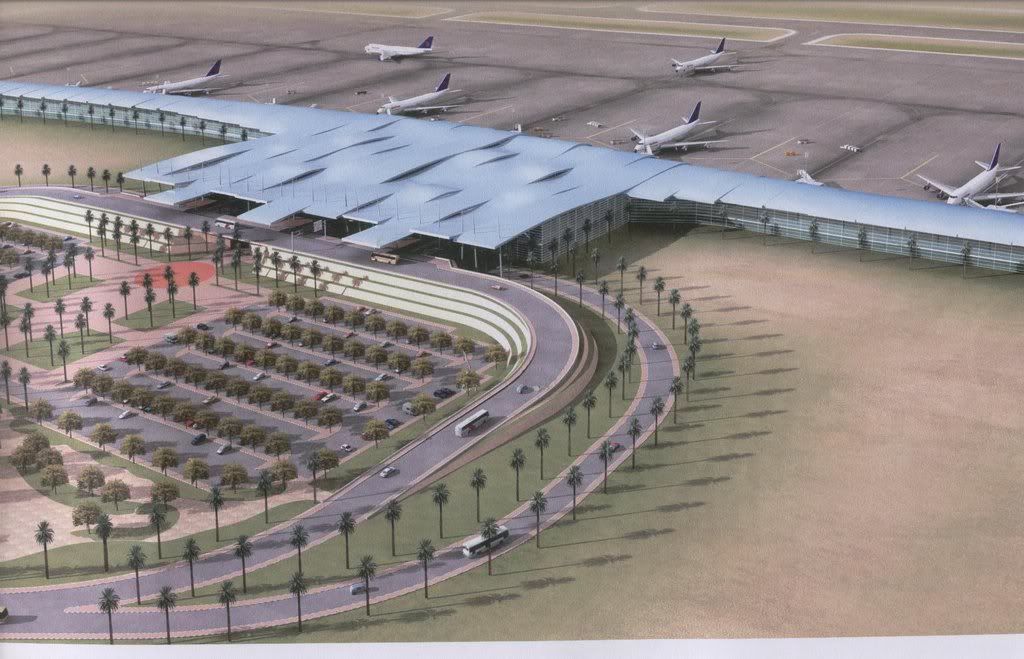
Terminal renders:


Cairo Airport, A Middle-East-Africa Hub

Cairo International Airport is the busiest airport in Egypt and the primary hub for Star Alliance member Egyptair. The airport is located to the north-east of the city around 15 km from the business area of the city.

Cairo International is the second busiest airport in Africa after OR Tambo International Airport in South Africa. Over 65 airlines use Cairo airport (including charter airlines) and 9 cargo airlines. With the assimilation of Egyptair into Star Alliance in July 2008 the airport has the potential to be a major hub with its positioning between Africa, the Middle East and Europe (especially with facilities for the A380).

In 2008, the airport served 14,360,175 passengers (+14.2% vs. 2007) and handled just over 138,000 aircraft movements (+12.4% vs. 2007). Of the top 100 airports in the world, CAI reported the highest growth rate of any airport in 2008.

The airport has three terminals with a third (and largest) opened on 27 April 2009. A fourth runway is currently under construction (opens late 2010) and a single cargo terminal (new cargo terminal is expected to go into operation in 2011). Runway 05L/23R is 3,300m long, 05C/23C has a length of 4,000m and 16/34 is 3,180m (all of the runways are 60m wide).

Terminal 1

The terminal facilities include Departure Hall 1, International Hall 3, and Hall 4 for Private & Non-commercial Aircraft Services. As part of the recent upgrading and facility improvement scheme, the CAA demolished the old hall 3, previously used for domestic arrivals and departures, to reconstruct a new hall to be used for international arrivals. Terminal 1 is locally known as the "Old Airport," although its facilities were recently given a complete overhaul and are newer than those of Terminal 2, which is still known as the "New Airport."

Terminal 1 is used by several Middle Eastern airlines, and an increasing number of other foreign carriers, such Air France and KLM. Terminal 1 has 12 gates. The bus brings you from the gate to the plane.

A new shopping mall called the 'AirMall' has been built near Terminal 1's New International Arrival Hall 3.

As of 2009 the façade of the terminal was being upgraded. The cladding which includes the landside facades of the terminal, the water tower and CAC's administration buildings. A Study on reorganizing the departure and arrival Halls is ongoing as well as the feasibility study to include a number of contact stands to improve the service and comfort levels to the passengers.

Terminal 2

Terminal 2 was inaugurated in 1986. It serves primarily European and Far Eastern airlines, airlines from the Persian Gulf region, and sub-Saharan Africa.

The architecture of the terminal building limits the possibility of expansion. There is significant congestion when more than 3 flights check in simultaneously, or more than 2 planes arrive at the same time. The terminal itself has 7 boarding gates.

In April 2009 a new exclusive lounge opened in the Departure area of Terminal 2 . The Exclusive lounge is a small world of its own and includes a separate VIP entrance guarantying privacy away from the general public and offers an impressive setting for departures.

In July 2008 the Cairo Airport Company (CAC) said it would allocate $400 million to develop the airport's Terminal 2. The move is meant to increase the terminal capacity from 3 million passengers to 7.5 million annually. The entire terminal's "look & feel" will improve dramatically once the renovation works are completed. Upgrade of Terminal 2 shall include a modernization of the 20 years old facility to reach the same level of service as the new Terminal 3 since both terminals will be operated "under one roof" in the near future.

NACO/ECG were assigned to prepare three different scenarios for Terminal 2’s re-development and the draft report was submitted in April 2008. The detailed design for T2 is ongoing. The project which will take 36 months to complete will double the capacity of T2 to around 7.5 million passengers and double the number of gates from 7 to 14 (and an additional 5 remote stands). It will include larger and more modern retail areas and will also include Airbus A380 gates. Upon completion in 2013 the passengers can expect a highly enhanced modern designed terminal offering international standard service levels and more passengers' convenience to include a large and appealing retail area and lounges.

As an interim measure several carriers operating from the terminal will briefly relocate to Terminal 1 while the terminal is renovated.

Terminal 2 is going to close in 2010.

Terminal 3

Terminal 3 opened for commercial operations on 27 April 2009. The facility is twice as large as the current two terminal buildings combined, with the capacity to handle 11 million passengers annually (6m international & 5m domestic) once the first phase is completed. It is located adjacent to Terminal 2, and the two terminals will initially be connected by a bridge. Access roads have already been redesigned, and the parking lots relocated.

With its hub at the airport EgyptAir's operations were overhauled with the full transfer of its operations (international and domestic) into the state of the art terminal between 27 April and 15 June 2009. To implement the Star Alliance “Move Under One Roof” concept.

All Star Alliance airlines serving Cairo Airport are located at Terminal 3.

The new terminal includes:

  • Two piers of extendable capacity and gates facilities serving domestic and international traffic, handled through contact and remote. The main building and the piers are connected by concourses. Two of the gates will be equipped to handle the Airbus A380 aircraft. Provisions for a third pier are currently in the planning stages.
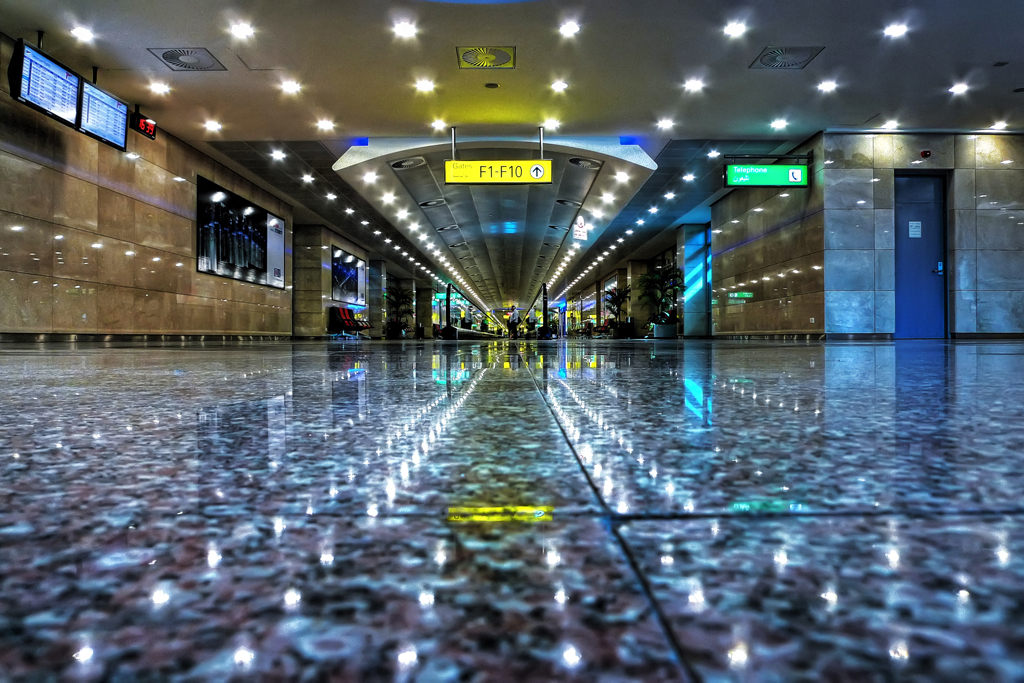
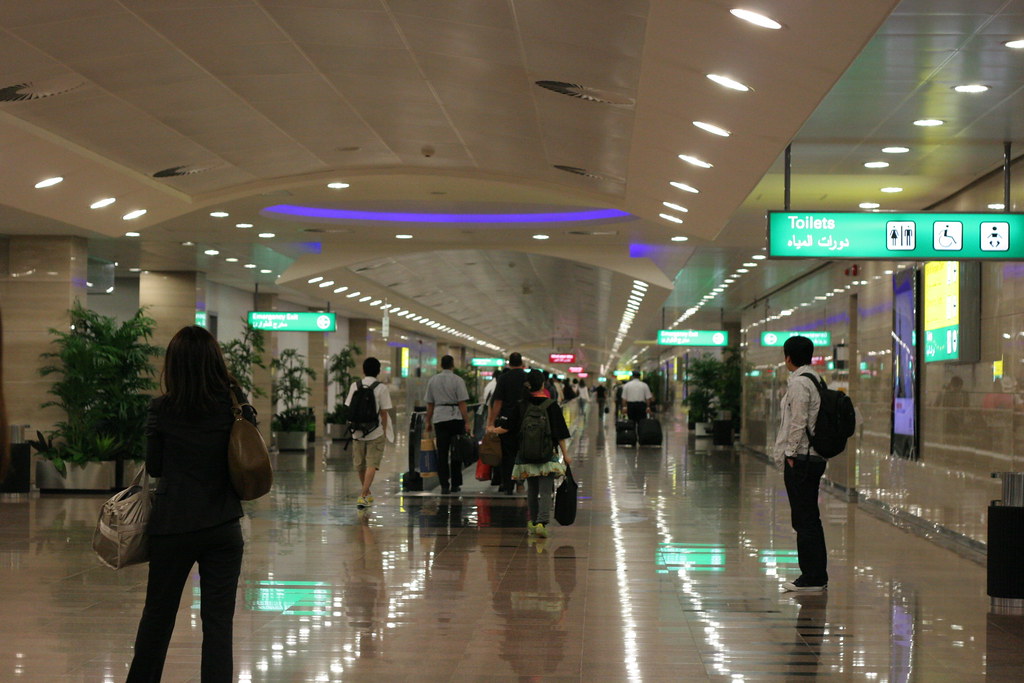
  • Terminal 3 has 23 gates (2 gates for the A380), 6 check-in islands consisting of 110 check-in counters, 76 emigration and immigration counters , 52 contact & remote aircraft parking stands , 7 baggage carousels, 63 elevators, 50 moving walkways and 51 escalators.
  • Retails space covers over 6,000m2.
  • Land side works including bridges and fly-over serving the traffic to and from the terminal building, surface car park areas (multi-story parking garage capable of holding more than 3,000 cars), a new access road connecting the airport with the Autostrad road (Cairo ring road) and upgrading the access roads.

Other developments

  • A luxury 350-room five-star Le Meridien hotel is to be built in front the new Terminal 3 for completion in 2011/2012. The hotel will be linked to the terminal by a skyway that is also equipped with moving walkway.
  • Construction of a new fourth 4,000m runway for completion in late 2010, south of the existing airfield.
  • The opening of a new 120m 'lotus-shaped' ATC Tower.
  • Construction of a multi-storey car park located in Terminal 2 for completion in June 2011.
  • Construction of a automated people mover (APM). The main station will be located between Terminals 2 and 3 and will become an integral part of the bridge connecting the two terminals. The 1.8km track is expected to go into operation by mid-2011 and will link Terminal 1, the Air Mall, the multi-storey car park and Terminals 2 and 3.
  • Continued upgrade of the landside façade of Terminal 1.
  • Renovation and expansion of Terminal 2.
  • The Cairo Cargo City (CCC) will provide state of the art facilities to support the growth in cargo traffic through the airport.
  • Expanding the Cairo Metro to serve the airport. The new line, which is in an advanced stage of execution, will link the airport at one end, and Mohandessin (in Giza), at the other. It is expected to be operational by 2012.
  • Development of real estate and the 'Oasis Project' which entails a business park with company headquarters and regional offices.
  • Nearby commercial and entertainment centers, to be built on 2.8 million square meters of land, will include a theme park, several shopping malls and 18 cinemas, at a total cost of LE950 million.
Visit: www.cairo-airport.com for more information.

Some nice Cairo airport video's


(quite out of date)


Terminal 3 Video


Renovated Terminal 1 facade.

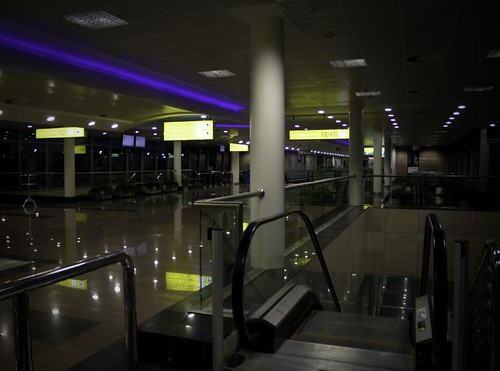
Terminal 3 pictures: